
Revolutionary Aircell packaging
Sustainable and efficient: CO2 reduction with lightweight technology. Make a requestGive us a call: +49 5976 9471 - 251Light. Green. Effective.
Sustainable industrial packaging with Aircell technology: CO₂ reduction through innovative lightweight solutions
The packaging industry is undergoing fundamental change. Faced with increasing environmental demands and the need to reduce their ecological footprint, companies around the world are looking for innovative solutions that combine sustainability and efficiency. As a leading provider of lightweight solutions, Aircell Platten has developed a technology that masters precisely this balance. Our patented air chamber panels are revolutionizing industrial packaging with a unique combination of minimized material consumption and maximum stability. The innovative 3D structure enables a weight reduction of up to 70% compared to conventional packaging materials, while at the same time fully guaranteeing product protection. This significant weight saving leads directly to a considerable CO₂ reduction in the entire supply chain – from production to transportation and disposal. By using our recyclable lightweight solutions, companies can not only meet their environmental responsibilities, but also achieve economic benefits through optimized logistics processes and reduced transport costs. In this comprehensive resource, you will learn how Aircell technology is transforming the packaging industry in a sustainable way and the tangible benefits it offers for your business and our planet.
| Key aspect | Advantages of Aircell technology |
|---|---|
| Weight reduction | Up to 70% lighter than conventional packaging materials |
| CO₂ savings | Significant reduction of the CO₂ footprint through weight savings and optimized transport processes |
| Material efficiency | Intelligent 3D structure with chamber technology maximizes stability with minimal use of material |
| Recyclability | 100% recyclable materials for closed loops |
| Economic efficiency | Cost reduction through more efficient logistics and lower material consumption |
Table of contents
1. Aircell technology: revolution in the packaging sector
2. CO₂ balance: Measurable environmental benefits through lightweight solutions
3. Industry-specific applications and success stories
4. From conventional to sustainable: A comparison with traditional packaging solutions
5. Integration into existing logistics chains: Practical implementation
6. Aircell in the circular economy model: Sustainable material cycles
7. Future prospects: Research and further development
8. Economic advantages: The profitability of sustainable packaging
9. FAQ: Frequently asked questions about Aircell packaging solutions
10. Glossary: Terms used in sustainable packaging technology
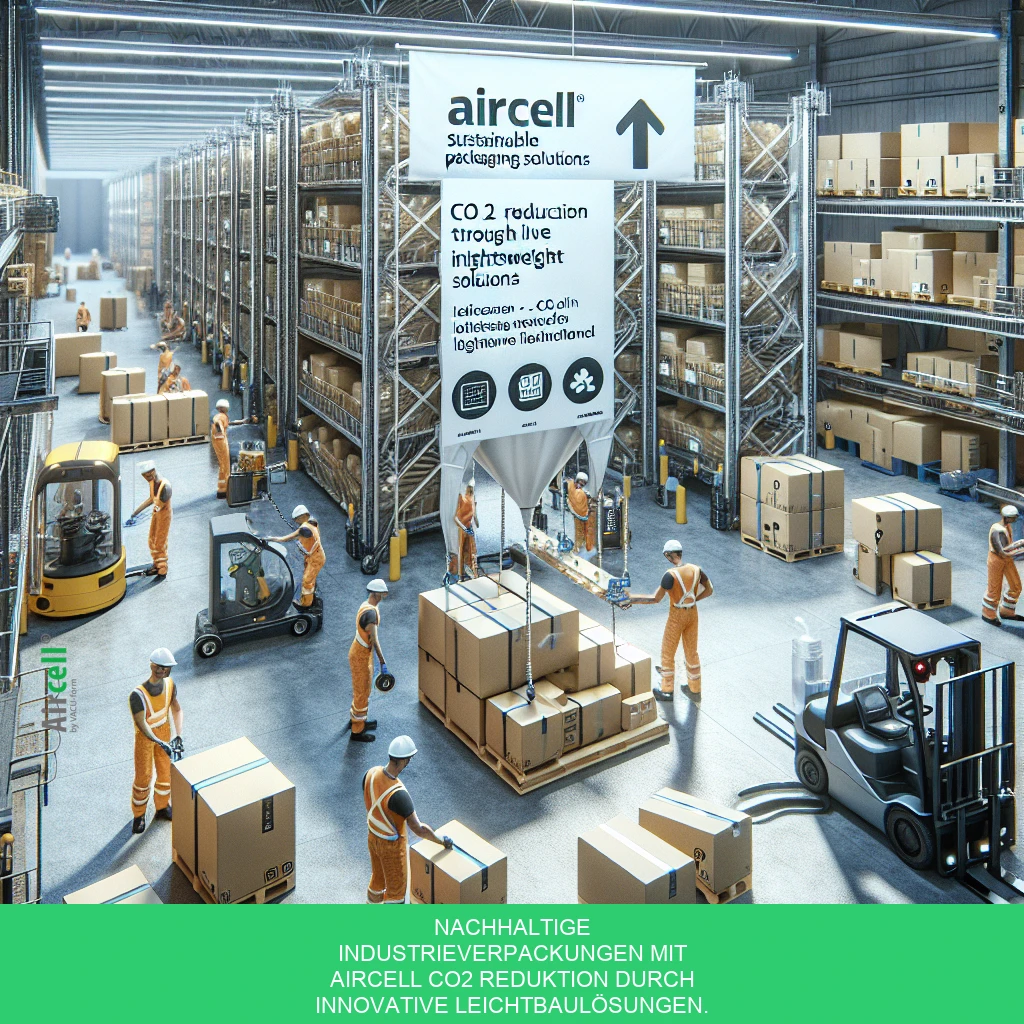
Aircell technology: revolution in the packaging sector
The foundation of our innovative packaging solutions is a proprietary technology based on years of research and development. Aircell sheets are characterized by their unique three-dimensional structure, which ensures maximum stability with minimum use of material.
The patented 3D air chamber structure
At the heart of Aircell technology is the patented chamber system. In contrast to conventional solid materials or simple honeycomb structures, our technology uses a complex system of air chambers that are reinforced by strategically placed connecting webs. This construction follows biomimetic principles – it imitates structures that are known in nature for their outstanding stability with minimal use of materials.
The chambers are arranged in such a way that they can optimally distribute compressive forces. This results in exceptional compressive strength and flexural rigidity, which is comparable to that of significantly heavier materials. The overall structure makes it possible to save up to 70% of the material without compromising on stability.
Innovative material composition
Aircell panels are primarily made from high-quality polymers such as polypropylene (PP). These materials are characterized by their excellent durability, longevity and complete recyclability. Depending on the area of application, the sheets can be modified with special additives to achieve additional properties such as increased UV resistance, antistatic properties or specific colorations.
A key aspect of our material technology is the precise control of the molecular structure during the manufacturing process. Using advanced extrusion processes, we achieve optimum alignment of the polymer chains, resulting in improved mechanical stability with less material input.
The advanced manufacturing process
Aircell panels are produced in a highly automated, energy-efficient process. Our modern production facilities use innovative extrusion technologies that enable the precise shaping of complex 3D structures.
Quality assurance and certification
Every production batch undergoes strict quality controls to ensure the consistently high quality of our panels. The test procedures include mechanical load tests, dimensional checks and material analyses.
Our products meet numerous international standards and are certified to ISO 9001 and ISO 14001. They are also subject to regular environmental audits to ensure that they meet the highest sustainability requirements.
“Aircell technology represents a quantum leap in the packaging industry. Thanks to the innovative structure with optimized material distribution, we achieve maximum stability with minimum weight – a decisive advantage for sustainable industrial packaging.”
The continuous development of our technology is at the heart of our corporate philosophy. In collaboration with research institutes and industry partners, we are constantly working on optimizing our products to achieve even greater weight savings and improved environmental properties.
CO₂ balance: measurable environmental benefits through lightweight solutions
Reducing CO₂ emissions is a key concern for companies that want to improve their environmental footprint. Aircell panels offer measurable benefits here, which extend throughout the entire value chain and make a significant contribution to climate protection.
Weight reduction as the key to CO₂ savings
The exceptional weight reduction of up to 70% compared to conventional packaging materials forms the basis for the impressive carbon footprint of our products. Studies have shown that every kilogram saved in transportation has a direct impact on fuel consumption and therefore on CO₂ emissions.
A scientific analysis by the Fraunhofer Institute for Environmental, Safety and Energy Technology confirms this: The use of lightweight solutions such as Aircell panels can save up to 94% of CO₂ emissions compared to traditional packaging materials.
Life cycle analysis: holistic view of environmental impact
The environmental benefits of our panels are not limited to the transportation phase. A comprehensive life cycle analysis (LCA) shows that Aircell panels have a significantly better environmental footprint than conventional alternatives in all phases – from raw material extraction through production and use to recycling.
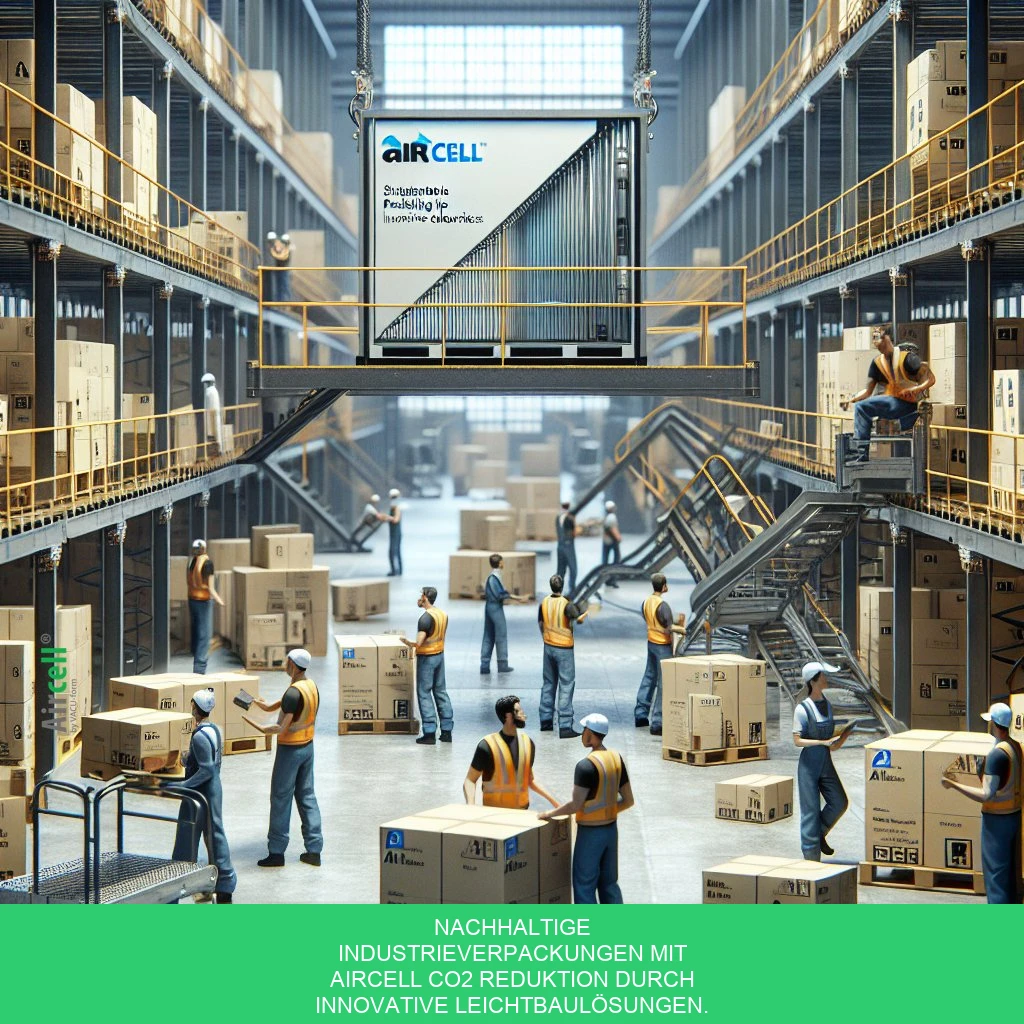
The key factors for this improved environmental balance are:
1. reduced material consumption: The innovative structure means that significantly less raw material is required, which saves resources.
2. energy-efficient production: The manufacturing process for our panels consumes less energy than the production of comparable conventional materials.
3. optimized transport logistics: the lower weight leads to fuel savings and enables more efficient transport processes.
4. complete recyclability: At the end of their life cycle, Aircell panels can be completely returned to the material cycle.
Quantitative CO₂ savings in specific application scenarios
To make the environmental benefits tangible, let’s look at a concrete example: a typical truck transport with conventionally packaged industrial goods causes around 80g of CO₂ per tonne-kilometer. By using Aircell packaging, the transport weight can be reduced by an average of 60%, which leads to a proportional reduction in CO₂ emissions.
For a company that transports 1,000 tons of goods annually over an average distance of 1,500 km, this means a CO₂ saving of around 72 tons per year – comparable to the annual CO₂ absorption of around 3,000 trees.
“Our analyses show that lightweight solutions such as Aircell technology are among the most effective measures for CO₂ reduction in the packaging and logistics industry. The combination of material reduction and optimized transport processes offers impressive environmental benefits.”
Contribution to sustainability goals and corporate responsibility
By integrating Aircell sheets into their packaging strategies, companies can actively contribute to achieving their sustainability goals. The measurable reduction of the carbon footprint not only supports compliance with regulatory requirements, but also strengthens the company’s profile in the area of corporate social responsibility (CSR).
Many of our customers use the detailed environmental data we provide for our products to improve their own sustainability reports and transparently document their climate protection efforts. This in turn improves the perception of environmentally conscious consumers and business partners.
Industry-specific applications and success stories
The versatility of Aircell panels allows them to be used in numerous industries. Each industry benefits from specific advantages that go beyond the general sustainability aspects.
Automotive industry: Lightweight transportation and logistics solutions
In the automotive industry, where just-in-time deliveries and efficient logistics processes are crucial, Aircell sheets have established themselves as the ideal solution for transport packaging. Sensitive components such as electronic parts, body parts and interior elements benefit from excellent protection with minimal weight.
By switching to Aircell container systems for the internal transportation of engine components, a leading German car manufacturer was not only able to reduce CO₂ emissions by 65%, but also improve handling efficiency in the production lines. The lighter containers make manual handling easier and reduce ergonomic stress for employees.
Visit our special page on Aircell panels in the automotive industry for detailed information on industry-specific solutions.
Electronics and high-tech: optimum protection with minimum weight
Electronic devices and high-tech components require particularly reliable packaging solutions that protect against shocks, electrostatic discharges and environmental influences. Aircell sheets can be equipped with special antistatic properties and offer excellent protection thanks to their shock-absorbing structure.
A global electronics group uses customized Aircell packaging for the transport of sensitive display components. The changeover led to a 78% reduction in transport damage and a 23% reduction in packaging costs at the same time.
Food industry: Hygienic and sustainable solutions
Hygiene, temperature resistance and food safety play a central role in the food industry. Our Aircell sheets, specially developed for this sector, meet all relevant hygiene requirements and are approved for direct contact with food.
A leading European dairy group relies on Aircell container rings for the transportation of dairy products. The temperature-resistant, easy-to-clean containers have not only improved transport efficiency, but also extended the shelf life of the products thanks to optimized cooling.
You can find out more about our customizable container rings under Container ring configurator.
Construction industry and trade fair construction: Lightweight structural elements
In addition to the classic packaging function, Aircell sheets are increasingly being used as structural elements in the construction industry and in trade fair construction. Their high stability and low weight make them ideal for temporary structures, decorative elements and lightweight partition walls.
An international stand builder uses Aircell panels to create innovative stand concepts that not only minimize transport costs thanks to their low weight, but also improve the ecological footprint of the exhibition stand thanks to their complete recyclability.
Discover more application examples for Aircell panels in exhibition stand construction.
E-commerce and mail order: optimized logistics and customer service
In the booming e-commerce sector, packaging efficiency has a direct impact on profitability. Aircell packaging solutions not only reduce shipping weight and therefore transportation costs, but also improve the customer experience through easy handling and environmentally friendly disposal.
A leading online retailer was able to reduce shipping costs by 18% by introducing Aircell shipping packaging, while increasing customer satisfaction through improved product protection and more sustainable packaging.
From conventional to sustainable: a comparison with traditional packaging solutions
To fully understand the benefits of Aircell sheets, a direct comparison with conventional packaging materials is revealing. This section highlights the key differences and quantifies the benefits of our innovative lightweight solutions.
Direct comparison of weight and material usage
The most obvious difference between Aircell panels and conventional materials is their weight. While traditional solid materials made of plastic or wood have considerable dead weights, Aircell panels achieve a weight reduction of up to 70% thanks to their intelligent 3D structure. This saving has a direct impact on material consumption and therefore on resource efficiency.
Example: Standard industrial packaging for machine parts made of solid plastic typically weighs around 12 kg. The corresponding Aircell solution weighs just 3.6 kg – with identical protection and stability properties.
Mechanical properties and product protection
It is worth noting that the weight reduction is not at the expense of the mechanical properties. On the contrary: the special design of the chambers gives Aircell panels excellent shock absorption and compressive strength. In standardized load tests, they show comparable or even better values than significantly heavier solid materials.
The compressive strength of Aircell sheets is 400-600 kPa, depending on the version – a value comparable to that of significantly heavier plastic sheets. At the same time, they offer better shock absorption thanks to their structure, which further improves product protection.
Ecological footprint over the life cycle
The ecological benefits of Aircell panels manifest themselves throughout the entire life cycle. The production processes are more energy-efficient as less material has to be processed. Transportation causes fewer emissions, and at the end of the life cycle, the complete recyclability ensures a closed material cycle.
A comprehensive life cycle analysis (LCA) shows that Aircell packaging solutions use:
– 65% less primary energy in production compared to conventional solid plastic materials
– 70% less transportation emissions
– 100% recyclable, while many conventional composite materials can only be partially recycled
Cost efficiency: economic added value of sustainable packaging
In addition to the ecological benefits, Aircell panels also offer significant economic advantages. The total costs over the life cycle (total cost of ownership) are significantly lower than with conventional solutions:
1. material costs: Despite the higher quality technology, the material costs are often comparable with conventional solutions due to the reduced use of materials.
2. transportation costs: The weight reduction leads to direct savings in transportation costs – particularly relevant for long transport routes or air freight.
3. handling costs: Lighter packaging means more efficient handling and less ergonomic strain for employees.
4. disposal costs: Full recyclability reduces disposal costs and in some cases can even lead to take-back proceeds.
“After switching to Aircell packaging solutions, we were able to reduce our annual logistics costs by 22%. At the same time, our carbon footprint in the area of packaging and transportation has been reduced by more than half – a double win for profitability and the environment.”
Adaptability and flexibility in comparison
Another key advantage of Aircell panels is their outstanding adaptability. In contrast to rigid conventional materials, they can be precisely adapted to specific requirements:
– Customized solutions for specific product shapes
– Flexibly adaptable air chamber structures for different load requirements
– Modifiable surface properties (antistatic, moisture-repellent, etc.)
– Easy integration of functional elements such as handles, closures or identification systems
This flexibility enables optimized packaging solutions that are precisely tailored to the requirements of the respective product and the supply chain – a decisive advantage over standardized conventional packaging.
Find out more about our innovative packaging solutions and applications.
Integration into existing logistics chains: practical implementation
The successful transition to sustainable industrial packaging requires more than just innovative products – it requires a well thought-out implementation strategy. Aircell sheets offer particular advantages here thanks to their seamless integration into existing logistics processes.
Analysis and optimization of existing packaging processes
The switch to Aircell technology begins with a thorough analysis of the current packaging and logistics processes. Our team of experts identifies optimization potential and develops tailor-made solution concepts that are precisely tailored to the specific requirements of your company.
This analysis phase includes:
– Detailed inventory of current packaging materials and processes
– Identification of weak points and optimization potential
– Evaluation of specific product requirements (protection, stability, etc.)
– Analysis of the logistics chain and transport conditions
– Evaluation of sustainability goals and regulatory requirements
Based on this comprehensive analysis, we develop a customized concept for the integration of Aircell packaging solutions that offers maximum environmental and economic benefits.
Customized solutions for specific requirements
One of the greatest strengths of Aircell panels is their adaptability to a wide range of requirements. With our modular approach, we can develop solutions that are precisely tailored to your products and logistics processes.
Customization options include:
– Dimensioning for optimal use of space
– Specific air chamber structures for different load requirements
– Integration of functional elements such as handles, closures or QR codes
– Adaptation of surface properties (e.g. antistatic for electronic parts)
– Development of reusable packaging systems with a long service life
Through a collaborative development process, we ensure that the customized solutions optimally meet all requirements.
Seamless integration into automated logistics processes
Automation and digitalization are playing an increasingly important role in modern logistics chains. Aircell packaging solutions are designed so that they can be easily integrated into automated processes:
– Compatibility with common conveyor systems and handling robots
– Optimized stackability for efficient storage and transport
– Integration of RFID tags or QR codes for end-to-end traceability
– Standardized dimensions for compatible logistics systems
– Easy handling thanks to ergonomic design
This integration capability minimizes adaptation efforts and enables smooth implementation even in highly automated environments.
Supporting the changeover process: from pilot project to full implementation
Switching to new packaging solutions is a process that requires careful planning and support. Our proven implementation approach comprises several phases:
1st concept phase: Development of customized solution concepts based on the analysis results
2. prototyping: creation and testing of prototypes under real conditions
3. pilot phase: implementation of the solution in a limited area to gain practical experience
4. optimization: adaptation and refinement based on experience from the pilot phase
5. full implementation: gradual expansion to the entire relevant area
6. continuous improvement: ongoing monitoring and optimization of processes
Throughout the entire process, our team of experts is on hand to provide advice and ensure that all technical and organizational challenges are successfully mastered.
Successful practical examples of integration
An international automotive supplier was able to significantly optimize its logistics processes through the gradual introduction of Aircell transport packaging. After a pilot phase in one production plant, the solution was rolled out to all European sites. The results were impressive:
– 35% reduction in packaging weight
– 28% less CO₂ emissions in the logistics chain
– 22% cost savings thanks to optimized transport processes
– Improved use of space in storage and transport
Particularly noteworthy: The integration into the existing automated handling and conveying systems was achieved without any major adjustments to the infrastructure.
Visit our Aircell panels website to discover more case studies and success stories.
Aircell in the circular economy model: sustainable material cycles
At a time when resource efficiency and the circular economy are becoming increasingly important, Aircell panels offer particular advantages thanks to their complete integration into sustainable material cycles.
Material selection for optimum recyclability
The basis for the outstanding recyclability of our products lies in the careful selection of materials. Aircell sheets are made from high-quality monomaterials such as polypropylene (PP) or high-density polyethylene (HDPE), which are characterized by excellent recycling properties.
In contrast to composite materials, which are often difficult to separate and recycle, our mono-material solutions enable simple and high-quality recycling. At the end of their life cycle, the materials can be easily shredded and processed into new products without any loss of quality.
The complete cycle: from production to recycling
Aircell panels are designed for the circular economy from the outset. The entire life cycle is designed to conserve resources and minimize waste:
1. resource-efficient production: the air chamber structure reduces material requirements by up to 70%.
2. long-lasting use: The high stability and durability enable a long service life, especially with reusable solutions.
3. easy reuse: Many of our packaging solutions are designed as reusable systems that can go through numerous usage cycles.
4. high-quality recycling: At the end of their life cycle, the materials can be fully recycled and used for new products.
5. use of recycled materials: We are continuously working to increase the proportion of recycled materials in our products in order to close the loop.
This consistent focus on recycling minimizes the ecological footprint and helps to conserve natural resources.
Practical take-back systems and recycling solutions
In order to put the theoretical benefits of the circular economy into practice, we offer comprehensive take-back and recycling systems for our products. In cooperation with specialized recyclers, we have developed efficient processes that ensure high-quality recycling.
Our customers benefit from:
– Customized take-back systems for used packaging
– Logistical solutions for efficient collection and consolidation
– Transparent recycling processes with traceability
– Certificates on recycled quantities for sustainability reporting
These practical solutions make it easy for companies to integrate their packaging into a closed loop and thus make an active contribution to conserving resources.
“The recyclability of packaging materials will be a decisive factor for sustainable supply chains in the future. Aircell solutions impress with their well thought-out choice of materials and the practical take-back systems that enable a genuine circular economy.”
Reduced environmental impact thanks to closed material cycles
The establishment of closed material cycles offers considerable environmental benefits. Compared to the traditional linear economy (production – use – disposal), the closed-loop model reduces the environmental impact:
– Reduce consumption of primary raw materials by up to 95%
– Reduce energy requirements for material production by up to 85%
– Reduce greenhouse gas emissions over the entire life cycle by up to 75%
– Reduce landfill pollution and the associated environmental impact
These benefits contribute significantly to improving the overall environmental performance of companies and support the achievement of ambitious sustainability targets.
Find out more about our sustainable solutions on our company page.
Cooperation with research institutions and industry partners
Innovation often arises at the interfaces between different disciplines. This is why we maintain close cooperation with universities, research institutes and industrial partners. This collaboration enables us to translate the latest scientific findings into practical solutions.
Our research partners include:
– Renowned technical universities with a focus on materials science and packaging technology
– Specialized research institutes for sustainable materials and the circular economy
– Industrial partners from various sectors for application-oriented development
– Start-ups with innovative approaches in the fields of materials science and digitalization
These diverse collaborations enrich our research and accelerate the development of forward-looking solutions.
Long-term vision: climate-neutral packaging solutions
Our long-term vision goes beyond incremental improvements. We aim to develop completely climate-neutral packaging solutions that have no negative impact on the climate over their entire life cycle.
The key components of this vision are:
– Fully bio-based or recycled source materials
– CO₂-neutral production processes using renewable energies
– Closed material loops without loss of quality
– Optimized transport processes with a minimized CO₂ footprint
– Intelligent reusable systems with maximum resource efficiency
Through consistent research and development, we are continuously making progress towards this goal and making a significant contribution to the sustainable transformation of the packaging and logistics industry.
Find out more about our innovative packaging solutions and current developments on our website.
Economic advantages: The profitability of sustainable packaging
Sustainable packaging solutions are often considered primarily from an environmental point of view. However, Aircell sheets offer significant economic benefits in addition to the ecological advantages, making them a profitable investment for future-oriented companies.
Cost analysis over the entire life cycle
A comprehensive consideration of cost-effectiveness must take into account the entire life cycle of the packaging solution. This shows that Aircell sheets are often significantly more economical than conventional alternatives, despite possibly higher initial costs.
An overview of the relevant cost factors:
1. material costs: The efficient use of materials thanks to the air chamber structure leads to considerable savings in raw material costs.
2. transportation costs: the lower weight significantly reduces freight and fuel costs – particularly relevant for longer transport distances and air freight.
3. handling costs: Lighter packaging simplifies handling processes and reduces personnel costs and ergonomic strain.
4. storage costs: The more efficient use of space through optimized design leads to savings in storage costs.
5. damage costs: The improved protective properties reduce product damage and the associated costs.
6 Disposal costs: Full recyclability minimizes disposal fees and in some cases can even lead to take-back proceeds.
Our profitability analyses show that by switching to Aircell packaging solutions, customers can reduce their total costs over the life cycle by an average of 15-30% – depending on the specific application conditions.
Concrete ROI scenarios based on practical examples
The return on investment (ROI) for Aircell solutions can be illustrated using specific practical examples:
Case study 1: Automotive supplier
– Initial investment for Aircell packaging system: +15% compared to conventional solution
– Savings in transport costs: -28% due to lower weight
– Savings in handling costs: -12% due to improved ergonomics
– Reduction in product damage: -35% due to optimized protection
– ROI: 9 months
– Long-term cost savings: 22% p.a.
Case study 2: Electronics group
– Initial investment for Aircell packaging system: +8% compared to conventional solution
– Savings in transportation costs: -35% due to drastic weight reduction
– Savings in storage costs: -18% due to space-saving design
– Reduction in product damage: -45% due to better shock absorption
– ROI: 5 months
– Long-term cost savings: 31% p.a.
These examples illustrate that the investment in Aircell packaging solutions usually pays for itself within a few months and leads to continuous cost savings thereafter.
Competitive advantages through sustainable packaging concepts
In addition to direct cost savings, sustainable packaging solutions offer important strategic competitive advantages:
1. fulfillment of regulatory requirements: Increasingly stringent environmental laws and packaging regulations are making sustainable solutions a necessity. Aircell users are well prepared and avoid potential fines or market access restrictions.
2. improved corporate image: The commitment to sustainable packaging strengthens the company’s image among environmentally conscious customers, investors and other stakeholders.
3. fulfillment of customer requirements: More and more companies are integrating sustainability criteria into their supplier evaluation. Sustainable packaging solutions can become a decisive differentiating factor here.
4. attractiveness for investors: ESG criteria (environmental, social, governance) are becoming increasingly important in investment decisions. Companies with demonstrably sustainable practices often achieve better valuations.
While these strategic advantages are more difficult to quantify than direct cost savings, they can be just as valuable or even more valuable in the long term.
Integration into existing profitability analyses
For a realistic assessment of economic efficiency, it is important to integrate Aircell solutions into the company’s existing profitability calculations. Our consulting team supports you in taking all relevant factors into account and creating a sound basis for decision-making.
Special attention should be paid to:
– Integration into existing logistics processes and systems
– Consideration of the entire supply chain, not just isolated process steps
– Evaluation of qualitative benefits such as improved product protection and customer satisfaction
– Consideration of long-term trends such as rising energy costs and stricter environmental regulations
This holistic approach makes it clear that Aircell packaging solutions are not only ecologically sensible, but also economically advantageous – a win-win situation for companies and the environment.
Contact us via our contact page to receive a customized profitability analysis for your specific requirements.
FAQ: Frequently asked questions about Aircell packaging solutions
How high is the actual CO₂ savings potential of Aircell packaging?
The CO₂ savings from Aircell packaging vary depending on the specific application and transportation routes. On average, our customers achieve emission reductions of 60-75% compared to conventional packaging materials. These savings result primarily from the reduced weight, which leads to lower fuel consumption during transport, as well as from the optimized use of materials in production. For particularly transport-intensive applications or air freight, the savings can even reach up to 94%. With average transport distances, every kilogram of packaging weight saved leads to around 3-5 kg of CO₂ emissions saved over the entire life cycle.
Are Aircell panels suitable for all types of products?
Aircell sheets offer exceptional versatility thanks to their customizable structure and can be used for a wide range of products. They are particularly suitable for products that require good impact protection but are not extremely heavy, such as electronic components, automotive parts, medical devices or high-value consumer goods. By adapting the air chamber structure and material thickness, we can optimize the sheets for specific requirements. For very heavy industrial goods with extreme loads, we offer reinforced special solutions. For applications with special requirements (extreme temperatures, aggressive chemicals), we develop customized material compositions. Ultimately, an optimized Aircell solution is possible for almost any application – our engineers will be happy to advise you on the possibilities for your specific products.
How does the recycling of Aircell packaging work in practice?
Aircell sheets are 100% recyclable as they are made from single-origin mono-materials (mainly PP or HDPE). In practice, we offer various recycling options: For business customers with larger quantities, we have established take-back systems in which used packaging is collected, transported to our recycling partners and processed into high-quality secondary raw materials. These then flow back into our production. For smaller quantities, the sheets can be disposed of via the regular plastic recycling systems (e.g. yellow garbage can in Germany). The clear material labeling on all our products facilitates correct sorting. Thanks to the single-origin materials, high-quality recycling is possible without any loss of quality, which enables a genuine cycle.
What customization options do Aircell panels offer for specific requirements?
Aircell panels offer exceptional customization options for individual requirements. The main variables we can customize are:
1. structural properties: The density and geometry of the air chambers can be precisely matched to the required load properties – from highly flexible to extremely rigid.
2. material thickness and weight: Depending on requirements, we can produce panels from a few millimeters to several centimeters thick.
3. material properties: In addition to standard polymers (PP, HDPE), we offer special material compositions for special requirements such as UV resistance, antistatic properties or food conformity.
4. surface finish: Various surface textures from smooth to structured are possible.
5 Geometric shapes: From flat plates to three-dimensional molded parts and complex container designs, a wide range of geometries can be realized.
6. functional elements: Integration of reinforcements, recessed grips, hinges or connecting elements.
Our development team works closely with customers to develop customized solutions that are precisely tailored to their specific requirements.
How do the costs of Aircell packaging compare with conventional solutions?
When considering costs, a holistic view of the entire life cycle is crucial. Depending on the application, the initial costs for Aircell packaging can be 5-15% higher than for simple conventional materials. However, these higher initial costs are more than offset by significant savings throughout the supply chain:
1. transportation costs: The lower weight (up to 70% lighter) significantly reduces freight costs – particularly relevant for longer transport routes or air freight.
2. handling costs: lighter packaging means more efficient logistical processes and lower personnel costs.
3. product protection: the improved protective properties reduce damage and the associated costs.
4. storage costs: storage space is used more efficiently thanks to optimized design.
5. disposal costs: The complete recyclability minimizes disposal fees.
Overall, our customers typically achieve cost savings of 15-30% over the entire life cycle, with an ROI after an average of 6-12 months.