
Aircell panels: The future of construction 2026 made easy
Innovative lightweight construction solutions for sustainable building projects Make a requestGive us a call: +49 5976 9471 - 251Light, stable, sustainable – Aircell panels
Aircell panels in the construction industry: lightweight solutions for modern construction projects
Light, stable, sustainable – Aircell panels in the construction industry
The construction industry is facing the challenge of finding sustainable and resource-efficient materials. Aircell sheets from VACU-form are innovative polypropylene twin-wall sheets that offer versatile solutions for various construction applications. With their special honeycomb structure, they combine low weight with high stability – ideal for temporary constructions, protective measures and modular systems.
The patented 3D structure makes Aircell panels significantly lighter than solid alternatives with comparable strength. With full recyclability, they meet the requirements for sustainable building materials and support the circular economy in the construction industry.
Material properties and product variants
Organization and structure
Aircell panels are made of high-quality polypropylene (PP) in a characteristic hollow chamber structure. This special construction gives the panels their unique combination of lightness and strength.
Available versions:
- Thicknesses: 3mm, 5mm, 9mm, 10mm, 15mm, 16mm
- Basis weight: 1,000 to 5,000 g/m² (depending on thickness)
- Standard format: Various panel sizes available
- Colors: Various standard colors and individual color design
Key properties for construction applications
- Low weight: Significantly lighter than solid panels with comparable stability
- Shock-resistant and unbreakable: suitable for mechanically stressed environments
- Moisture resistant: No water absorption or deformation due to moisture
- Chemical-resistant: Resistant to many substances used in industry
- Easy to process: can be cut, drilled and bent
- 100% recyclable: complete return to the material cycle
- Weather resistant: Suitable for indoor and outdoor use
Current applications in the construction industry
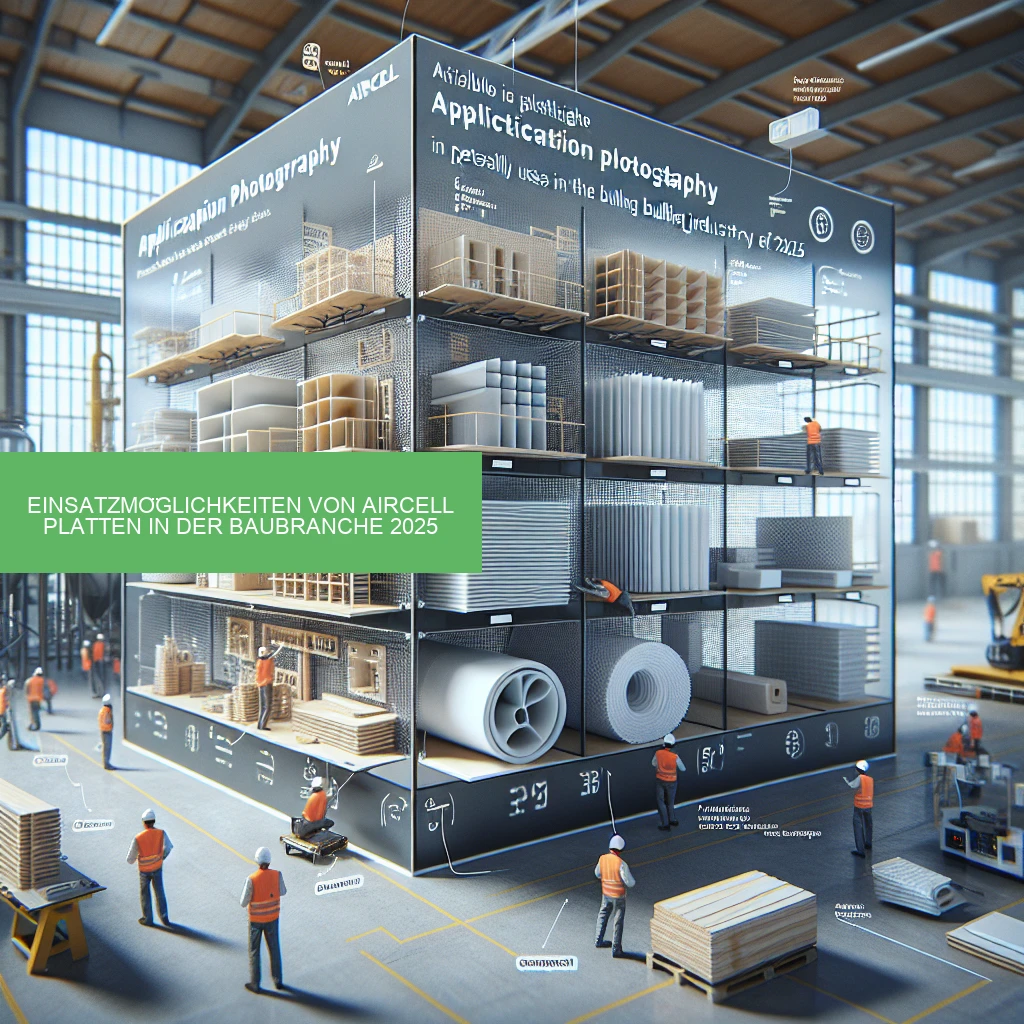
Floor and surface protection
A frequent application of Aircell panels is the protection of finished surfaces during the construction phase:
- Protection of floor areas during further construction work
- Covering sensitive surfaces such as natural stone or parquet
- Protection of wall and door areas in passage zones
- Temporary walkways on construction sites
The sheets are reusable after use and can be used for multiple projects – a sustainable alternative to disposable protective films.
Temporary partition walls and screens
Aircell panels offer practical advantages for temporary partitions on construction sites:
- Quick assembly without special tools
- Easy transportation due to low weight
- Flexibly adaptable to different room heights
- Reusable for multiple projects
- Dust shielding between work areas
Transport and packaging protection
Building components such as windows, doors or façade elements require reliable protection during transportation and storage:
- Cushioning through the hollow chamber structure
- Can be individually cut to size for different components
- Low additional weight during transportation
- Multiple use
Innovative application options
Modular design
Aircell panels are suitable for various modular applications:
- Lightweight wall systems for temporary buildings
- Modular room dividers for flexible room design
- Temporary exhibition pavilions
- Mobile partition walls for events
The thicker variants in particular (9mm, 10mm, 15mm, 16mm) offer sufficient stability for self-supporting constructions.
Formwork systems
Aircell panels can be used as an innovative solution for reusable formwork:
- Lightweight formwork elements for non-structural concrete work
- Shaping for curved concrete elements
- Lost formwork for special applications
- Greater reusability than traditional timber formwork
Composite materials
Composite solutions with specific properties are created by combining them with other materials:
- Sandwich panels with Aircell core
- Reinforced structures through combination with other plastics
- Hybrid systems for special requirements
Technical specifications
Product overview according to strengths
| Type | Thickness | Weight per unit area | Typical construction applications |
|---|---|---|---|
| 3/1000 | 3mm (±0.4) | 1,000 g/m² (±50) | Lightweight protective covers, displays |
| 5/1500 | 5mm (±0.4) | 1,500 g/m² (±60) | Floor protection, partition walls |
| 5/2000 | 5mm (±0.4) | 2,000 g/m² (±100) | Reinforced floor protection |
| 9/2300 | 9mm (±0.4) | 2,300 g/m² (±100) | Modular structures, formwork |
| 10/2500 | 10mm (±0.4) | 2,500 g/m² (±100) | Self-supporting elements |
| 10/3000 | 10mm (±0.4) | 3,000 g/m² (±100) | Reinforced structures |
| 10/4000 | 10mm (±0.4) | 4,000 g/m² (±150) | Heavy duty applications |
| 15/5000 | 15mm (±0.5) | 5,000 g/m² (±200) | Heavy-duty temporary constructions |
| 16/5000 | 16mm (±0.5) | 5,000 g/m² (±200) | Special heavy duty applications |
Selection criteria for construction projects
The following factors should be taken into account when selecting a suitable panel thickness:
- Load requirements: For structural applications, select thicker panels (from 9 mm)
- Project duration: Plan for greater stability for longer-term installations
- Ambient conditions: All variants are resistant to moisture and weathering
- Processing requirements: Thinner sheets are easier to bend and shape
- Reusability: All Aircell panels can be used multiple times
Processing and installation
Cutting and shaping
Aircell panels can be processed with standard tools:
- Precise cutting with circular saws or jigsaws
- Easy cutting of thinner sheets with cutter knives
- Drilling with standard drill bits
- Shaping through controlled heating
Connection techniques
- Mechanical connections with screws or rivets (removable)
- Bonding techniques with PP-compatible adhesives (permanent)
- Click systems for modular applications
Surface finishing
Aircell panels can be finished for special requirements:
- Printing for information or advertising elements
- Anti-slip coating for walkways
- Colored design according to customer requirements
Sustainability and circular economy
Environmental benefits
Aircell panels support sustainable building processes:
- Material efficiency: hollow chamber structure reduces material usage
- Lower transport weight: reduced CO₂ emissions during transportation
- Multiple use: reusability for temporary projects
- 100% recyclable: complete return to the material cycle
- Long service life: Robust and durable with proper handling
Recycling and disposal
At the end of their useful life, Aircell panels can be recycled:
- Take-back via plastic recycling systems
- Reprocessing into new PP products
- Closed material cycle
Economic aspects
Cost benefits
- Lower material costs per m² than many alternatives
- Reduced transportation costs due to low weight
- Lower installation costs due to simple processing
- Reusability reduces overall costs for multiple projects
- No special tools required
Efficiency in the construction process
- Fast installation saves construction time
- Simple handling reduces personnel requirements
- Flexibility for plan changes
- Disassembly and reuse without loss of quality
Exemplary application scenarios
Scenario 1: Temporary exhibition pavilion
Initial situation: An architectural office needs a flexible exhibition system that can be used several times at different locations.
Possible solution with Aircell panels:
- Self-supporting structure made of 10mm Aircell panels
- Modular wall elements for tool-free assembly
- Reusable design for multiple events
- Printing for branding and information
Potential advantages: Reduced material costs, minimal assembly effort, easy transportation.
Scenario 2: Floor protection during renovation
Initial situation: In a historic building, high-quality parquet floors need to be protected during renovation work.
Possible solution with Aircell panels:
- Full-surface cover with 5mm panels
- Impact-resistant protection against tools and materials
- Moisture-resistant for wet work
- Reusable after the end of the project
Potential advantages: Reliable protection, no damage, sustainable solution.
Scenario 3: Modular office partitions
Initial situation: A company needs flexible room partitioning solutions for changing team sizes.
Possible solution with Aircell panels:
- Free-standing partition walls made from 9mm panels
- Modular system for different configurations
- Optionally with integrated cable routing
- Quick redesign without structural interventions
Potential advantages: Maximum flexibility, no permits required, economical.
Quality and standards
Technical standards
Aircell panels are produced to high quality standards:
- Precise manufacturing tolerances
- Consistent material properties
- Quality control during production
- Technical documentation available
Food contact
The polypropylene used is food-safe and suitable for corresponding applications.
Frequently asked questions
How do Aircell panels differ from other lightweight construction materials?
Aircell panels are characterized by their patented 3D hollow chamber structure made of polypropylene. Compared to other lightweight construction materials, they are particularly moisture-resistant, chemical-resistant and fully recyclable. Their high strength and low weight make them ideal for construction applications where both stability and easy handling are required.
Which panel thickness is suitable for which building application?
Lightweight protective functions (3mm): Temporary covers, displays
Standard floor protection (5mm): Protection of finished floors, simple partition walls
Modular structures (9-10mm): Self-supporting elements, formwork, stable partition walls
Heavy-duty (15-16mm): Heavy-duty temporary structures, special requirements
How are Aircell panels attached?
Various methods are available depending on the application:
- Mechanical connections (screws, rivets) for demountable solutions
- Bonding techniques with PP adhesives for permanent joints
- Click or plug-in systems for modular applications
- Hanging in profiles or frame constructions
How long do Aircell panels last outdoors?
Aircell panels are weather and moisture resistant and retain their structural properties for a long time. UV-stabilized versions can be requested for permanent outdoor applications. For temporary applications, the panels can be reused several times.
Are special colors and formats available?
Yes, individual solutions are available in addition to standard colors and formats:
- Special color design according to RAL or Pantone
- Customized cuts
- Printing according to customer requirements
- Surface finishes (anti-slip, textile)
How is recycling carried out after use?
Aircell panels are made of polypropylene (PP) and are 100% recyclable:
- Return via plastic recycling systems
- Sorting by material type (PP)
- Processing into PP pellets
- Use for new plastic products
Many manufacturers offer take-back programs to promote the circular economy.
Conclusion: Aircell panels as a versatile solution in the construction industry
Aircell panels offer an innovative combination of low weight, high stability and sustainability for modern construction projects. With their characteristic hollow chamber structure, they are suitable for a wide range of applications – from simple floor protection to temporary partition walls and modular constructions.
The most important advantages at a glance:
- Significantly lighter than solid alternatives with comparable strength
- 100% recyclable and reusable
- Simple processing with standard tools
- Moisture and weather resistant
- Economical through multiple use
- Available in different thicknesses and colors
Aircell panels offer flexible, resource-saving solutions for construction companies, architects and planners. Easy handling, reusability and complete recyclability make them a forward-looking alternative for temporary and permanent construction applications.
The experts at VACU-form are available for project-specific advice and technical details. Contact us to find the optimum solution for your construction project.